From 30 minutes to search one HACCP record to just 2 minutes with AI.
Standardizing hygiene and quality issue response across all factories
30 min
2 min
93% reduction
Past case search time
All factories in 5 months
Post-implementation impact
Challenges before implementation
Company C's quality assurance department faced three major challenges.
First was the efficiency of searching HACCP-related documents. Records such as raw material receiving logs, temperature control logs, cleaning records, and corrective action reports were stored in different formats at each factory, and searching past cases took more than 30 minutes on average per case. In complaint response situations where speed was essential, this delay was critical. In some past cases, delayed information caused the initial response to fall behind, forcing the company to expand the scope of product recalls.
Second was the knowledge gap between factories. Troubleshooting knowledge accumulated at the main factory was not deployed to new factories or regional sites, so each factory continued inefficiently solving the same problems independently. At new factories, initial defects that should have been avoidable recurred, significantly worsening yields during the first three to six months after startup.
Third was the concentration of expertise among veteran quality control staff. Experience-dependent judgments, such as identifying foreign object contamination and making microbiological control decisions, were concentrated among a few veterans, making retirement risk increasingly visible. In a survey of veteran employees, 78% said they did not believe their know-how would remain in the organization.
Major Food Manufacturer Company C
For Company C, the speed of responding to foreign object complaints from consumers and abnormalities in shipping inspections was critical to maintaining its quality brand. However, HACCP records, hygiene management logs, and past complaint response reports were scattered across paper documents and PDFs, so investigating what had caused similar symptoms in the past took more than 30 minutes every time. With its FSSC 22000 renewal audit approaching, the company introduced CLAVI Mining and simultaneously reduced response time for quality issues while closing the knowledge gap between factories.。
。
Industry
Food manufacturing
Implementation scope
Quality assurance, manufacturing sites, and hygiene management departments
Implementation period
4-week PoC → 2 months for one factory rollout → 5 months for all factories
Reasons for selection
Company C selected CLAVI Mining for the following three reasons.
First, AI could learn directly from scanned paper PDFs and images of handwritten logs. Other general-purpose RAG services assumed that paper documents would first need to be digitized again, with estimated preparation costs exceeding 20 million yen. CLAVI Mining eliminated this step, which was decisive given the available capacity of the quality assurance department.
Second, its patented hallucination-prevention technology. In food quality decisions, incorrect answers can directly lead to recalls and administrative responses, so reliability was the top priority. During PoC comparison testing, when asked about information not present in internal knowledge, a general-purpose LLM presented a fictitious procedure, while CLAVI Mining clearly answered, 'No corresponding internal record exists.' This received high marks in the technical evaluation.
Third, support for HACCP and FSSC 22000 audits through transparency logs. The ability to reference the source documents behind AI answers on the spot supported accountability during third-party audits. In preliminary interviews with an external certification body, the company also received the view that an AI system with log functionality could be incorporated into the audit scope without issue.
Post-implementation effects (5 months after rollout to all factories)
[Past case search time] The average time per case was reduced from 30 minutes to 2 minutes, a 93% reduction. As the initial response time for complaints was greatly shortened, there were multiple cases where the recall scope could be narrowed.
[Knowledge sharing between factories] The response knowledge of the main factory became instantly available to five other factories, reducing repeated occurrences of the same issues from 42 cases per year to 11, a 74% decrease. It also contributed significantly to yield improvement during the startup period of new factories.
[Dependence on veterans] 80% of quality judgments could now be completed independently by on-site staff, allowing veterans to shift their time from judgment confirmation to quality improvement planning. As a result, the number of improvement proposals increased 2.6 times year over year.
[Audit response] During the FSSC 22000 renewal audit, presenting corrective action cases from the past six months was shortened from a half-day task to a 30-minute task. The audit body also highly evaluated the company's record management system.
Comment from the Head of Quality Assurance
"In the food industry, speed, accuracy, and traceability are required as one integrated set. Because CLAVI presents evidence, on-site teams can trust it, and as a result, decision-making speed has improved. Next, we would like to expand its use to sharing trouble-related information with raw material suppliers."
Insights from this case and future development
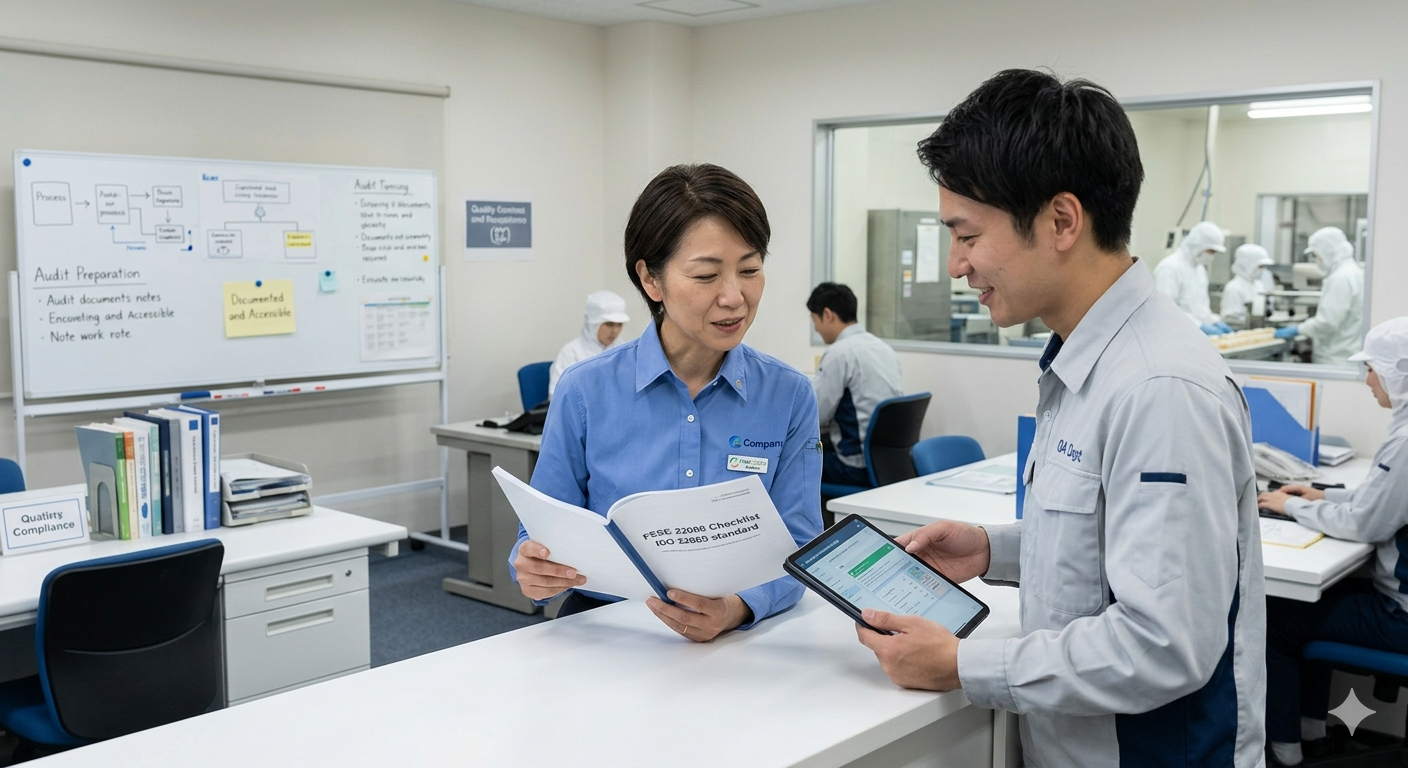
The biggest insight from Company C's case is that quality management is not a battle of document preparation capability, but a battle of whether necessary information can be retrieved when needed. For standards such as FSSC 22000 and ISO 22000, the focus is shifting from simply having documents to keeping them in a usable state. AI-powered instant access to knowledge is now directly connected to the competitiveness of the audit system.

Company C began using CLAVI Mining in the quality assurance department and then gradually expanded it to raw material procurement, logistics, and customer response departments. In particular, through AI analysis of inspection certificates provided by raw material suppliers and instant reference to regulatory documents for overseas exports, it is becoming a platform that makes quality-related information responsive across the entire company.
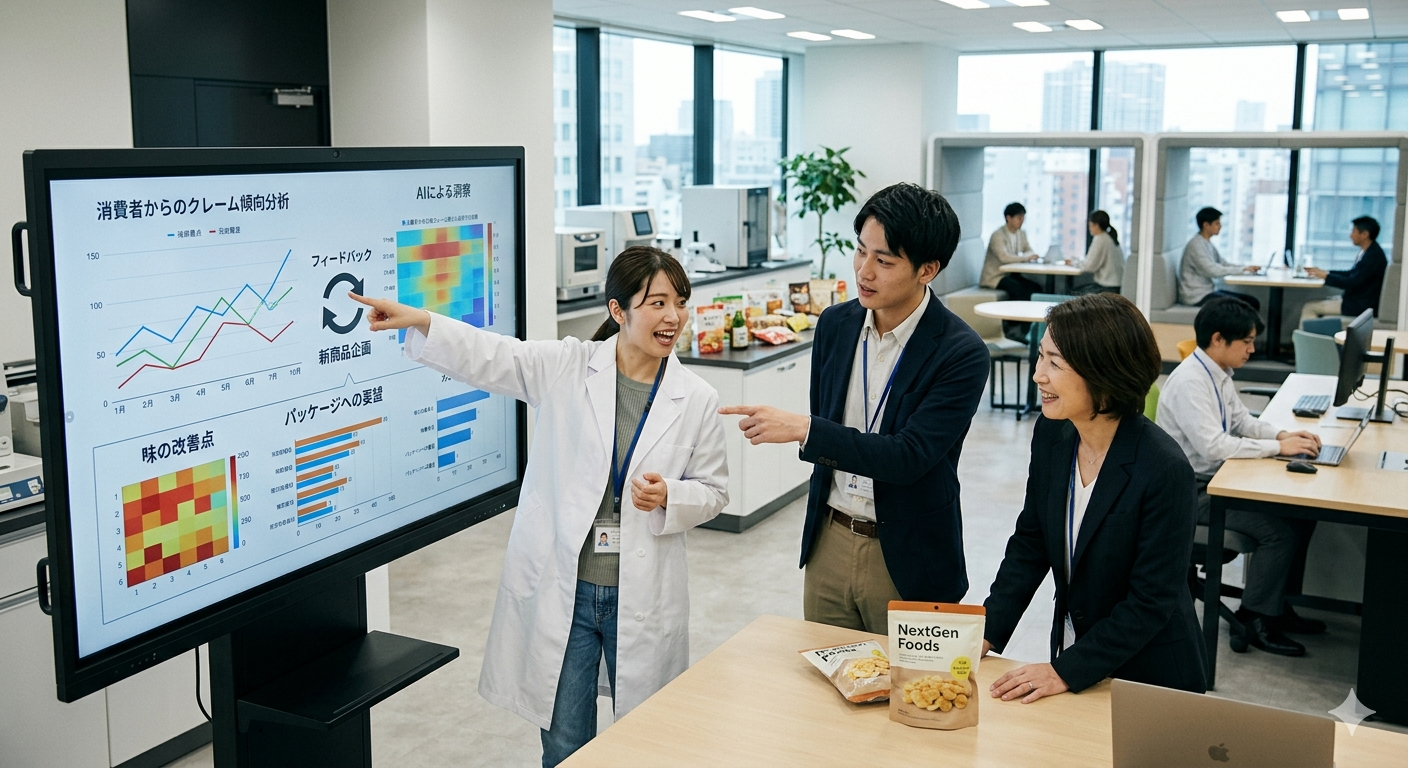
Going forward, the company is also considering using AI to analyze consumer complaint trends and feed insights back into product planning. Its use is evolving in line with management's direction: from quality defense to a growth strategy driven by quality. Quality investment by food manufacturers is shifting from a cost center to a source of strategic competitiveness.